
SavvyCal
- Freemium
- Web, iOS, Android
- Free plan available
- No credit card
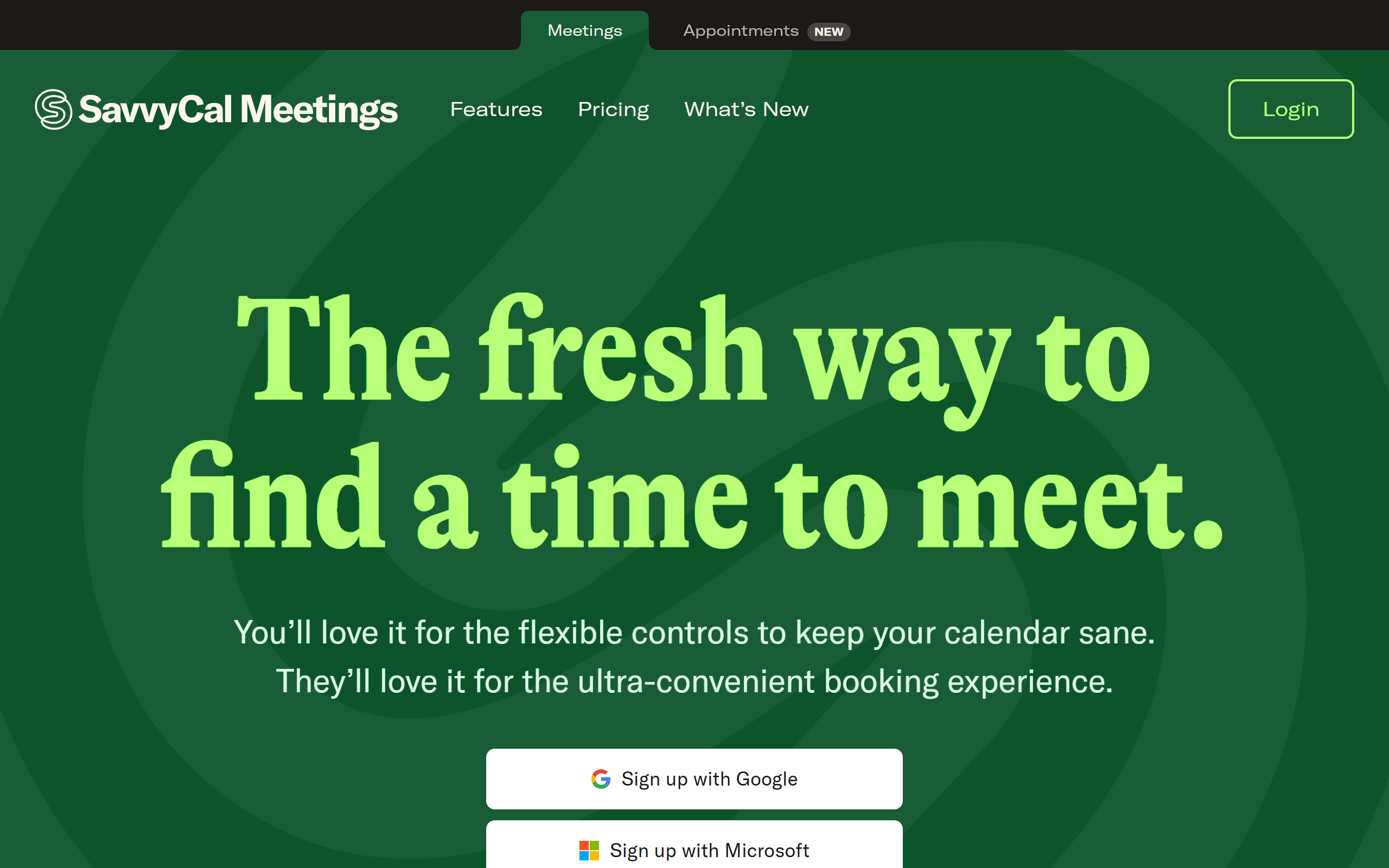
What is SavvyCal?
Key features
Availability sharing
Share your free time without giving full calendar access to others
Group scheduling
See overlapping availability across multiple participants instantly
Calendar integration
Syncs with Google Calendar, Outlook, and other major systems to reflect real commitments
Booking links
Generate shareable links that let others pick times directly from your available slots
Time zone handling
Automatically accounts for different time zones across participants
Meeting templates
Save scheduling preferences for recurring meeting types
Pros & cons
Advantages
- Faster than email or calendar invite ping-pong, especially for group meetings
- Shows genuine availability based on synced calendars rather than manual input
- Works across different calendar platforms, so no one needs to switch tools
- Simple interface that requires minimal explanation to participants
Limitations
- Requires participants to visit a link or interface rather than responding to a calendar invite they already expect
- Free tier may have limitations on features or number of meetings you can schedule
Use cases
Scheduling interviews across multiple hiring team members
Coordinating team meetings when people work across different time zones
Finding time for group projects or committee meetings in academic settings
Booking client calls where you want to offer a few fixed options without manual coordination
Planning recurring meetings where availability changes week to week
Ready to try SavvyCal?
Pricing
Get started with SavvyCal
Click through to SavvyCal and start using it now.
- Free plan available
- No credit card