
Sedai
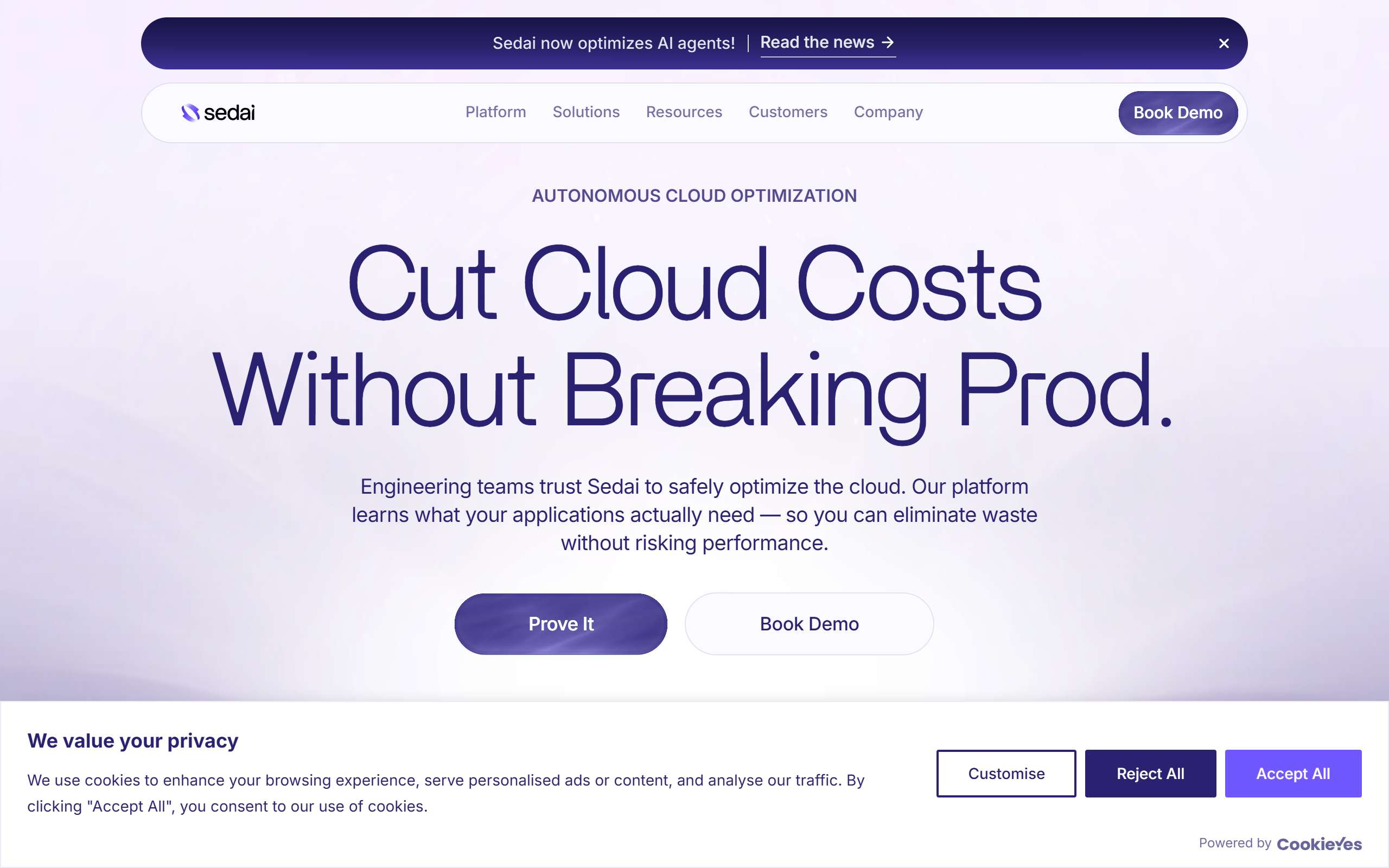
Sedai, an AI-powered autonomous cloud management platform, streamlines operations by continually optimizing cloud resources for cost, performance, and availability, reducing the pain of today’s manual
- Freemium
- Web
- Data & AnalyticsAI Tools for Engineering
- Free plan available
- No credit card
What is Sedai?
Key features
Continuous cloud resource optimisation
monitors and adjusts cloud infrastructure automatically to balance cost, performance, and availability
Cost reduction
identifies and eliminates unused resources, recommends right-sizing for instances, and spots wasteful spending patterns
Performance management
scales resources based on demand to maintain application performance without manual tuning
Multi-cloud support
works across major cloud providers including AWS, Google Cloud, and Azure
Autonomous operation
applies optimisations automatically once policies are set, reducing need for manual cloud management
Alerts and insights
provides visibility into cloud spending and resource behaviour through dashboards and reporting
Pros & cons
Advantages
- Reduces cloud bills by identifying waste and recommending or automatically applying cost optimisations
- Saves engineering time by automating routine cloud management tasks that would otherwise require manual attention
- Improves application performance through intelligent resource scaling and allocation
- Works across multiple cloud providers, useful for organisations with multi-cloud strategies
Limitations
- Effectiveness depends on having clear policies and thresholds set upfront; misconfigured rules could lead to poor decisions
- May require integration work and ongoing tuning to match your specific infrastructure patterns and business requirements
- Like most autonomous systems, there is risk of unintended changes if the platform doesn't account for your unique workload characteristics
Use cases
Reducing AWS, Google Cloud, or Azure bills for organisations with large or complex cloud infrastructure
Automating resource scaling for applications with variable traffic patterns to maintain performance whilst controlling costs
Right-sizing over-provisioned instances to free up budget without sacrificing reliability
Managing cloud resources across multiple cloud platforms from a single interface
Identifying and eliminating unused or orphaned cloud resources that accumulate over time
Ready to try Sedai?
Pricing
Free
Free
Access to core platform features with basic optimisation capabilities and limited cloud environment monitoring
Paid Plans
Custom pricing
Full autonomous optimisation, multi-cloud support, advanced analytics, priority support, and custom policy configuration
Get started with Sedai
Click through to Sedai and start using it now.
- Free plan available
- No credit card