Stable Attribution
A tool that traces AI-generated images back to the most similar human-made images in the training data.
- Always free
- No credit card
What is Stable Attribution?
Key features
Training data lookup
Decodes an AI-generated image into the most similar examples from the dataset the model was trained with.
Similarity search engine
Uses knowledge of the Stable Diffusion model weights to augment a similarity search across the training images.
Source image surfacing
Returns the training images judged most likely to have influenced a given generated image.
Artist crediting goal
Aimed to assign attribution back to the original artist or creator of each source image.
No data claims
The authors stated they did not claim rights to any uploaded or generated images and would not train models on them.
Community identification
Invited the public to help identify artists in the discovered source images.
Open research direction
Documented limitations of Version 1 and ongoing research into broader generative model attribution.
Pros & cons
Advantages
- The underlying idea addressed a genuine concern around consent, credit and compensation for artists whose work trained AI image models.
- The tool was free to use, with no account, subscription or payment required.
- The authors were transparent about how the similarity-based attribution worked and about its limitations.
- They publicly committed not to claim rights to uploaded images or to train any models on them.
- The FAQ openly acknowledged that Version 1 was imperfect rather than overstating accuracy.
Limitations
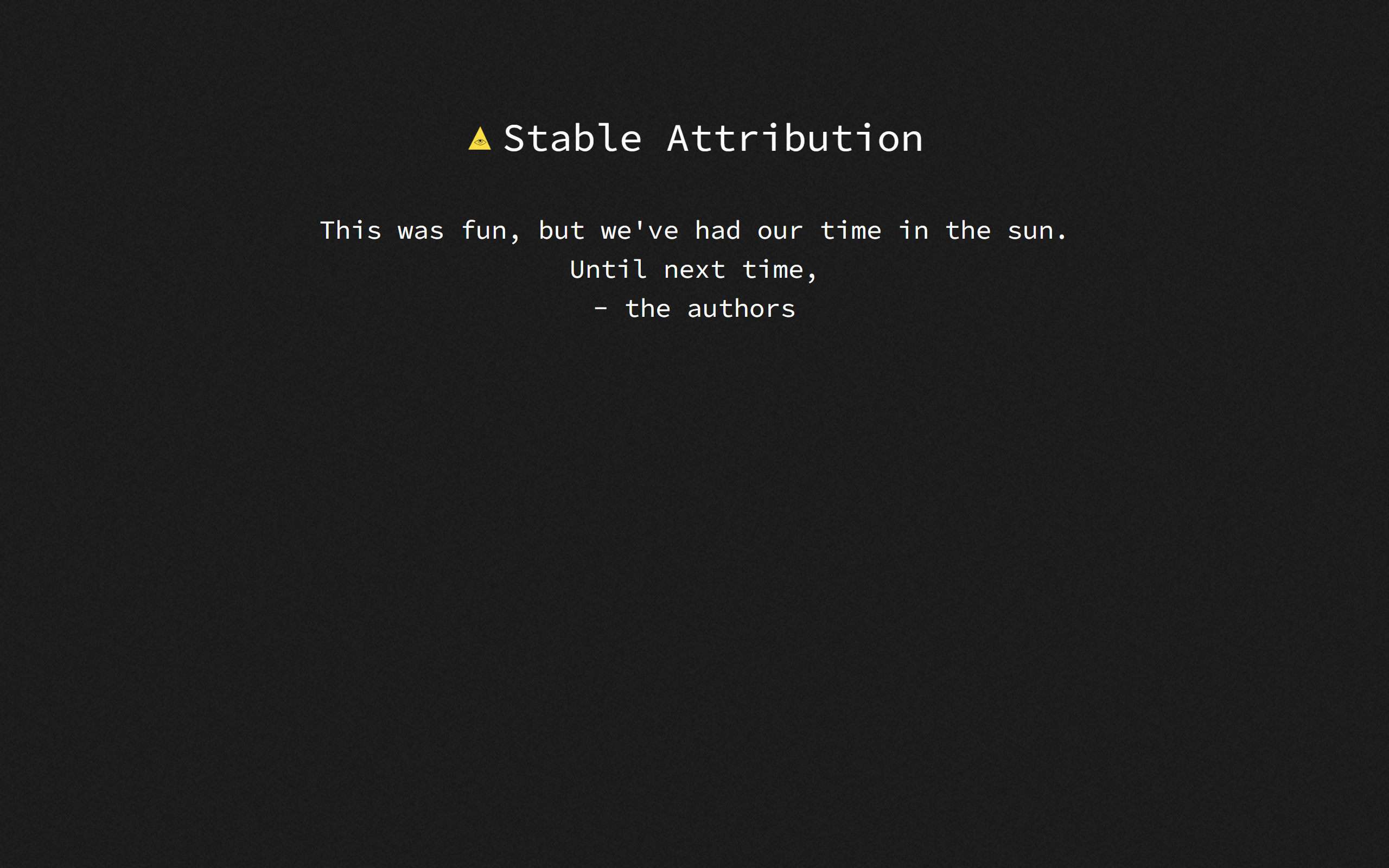
- The project has been sunset by its authors and the interactive image lookup is no longer operational, so the homepage now shows only a farewell message.
- Attribution was based on visual similarity rather than confirmed provenance, so matches were estimates and could be wrong.
- Version 1 was acknowledged to be imperfect due to noisy training processes and dataset errors.
- There is no ongoing support, roadmap or active maintenance, as the team moved on to other work at Chroma.
Use cases
Artists checking whether their work appeared among the closest training images for a given AI generation.
Researchers exploring how training data influences the output of diffusion-based image models.
Writers and journalists illustrating the data-provenance and copyright debate around generative AI.
Designers and creators investigating the likely sources behind a specific AI-generated image.
Educators demonstrating how AI image attribution and similarity search work in practice.
Ready to try Stable Attribution?
Pricing
Free
Free
Free tool with no public paid plans; image attribution lookup offered at no cost while the service was operational.
Get started with Stable Attribution
Click through to Stable Attribution and start using it now.
- Always free
- No credit card