
SurferSEO
AI-powered content optimization tool for higher search rankings.
- Free
- Web, Chrome Extension
- WritingSEOAI Content Optimizers
- Always free
- No credit card
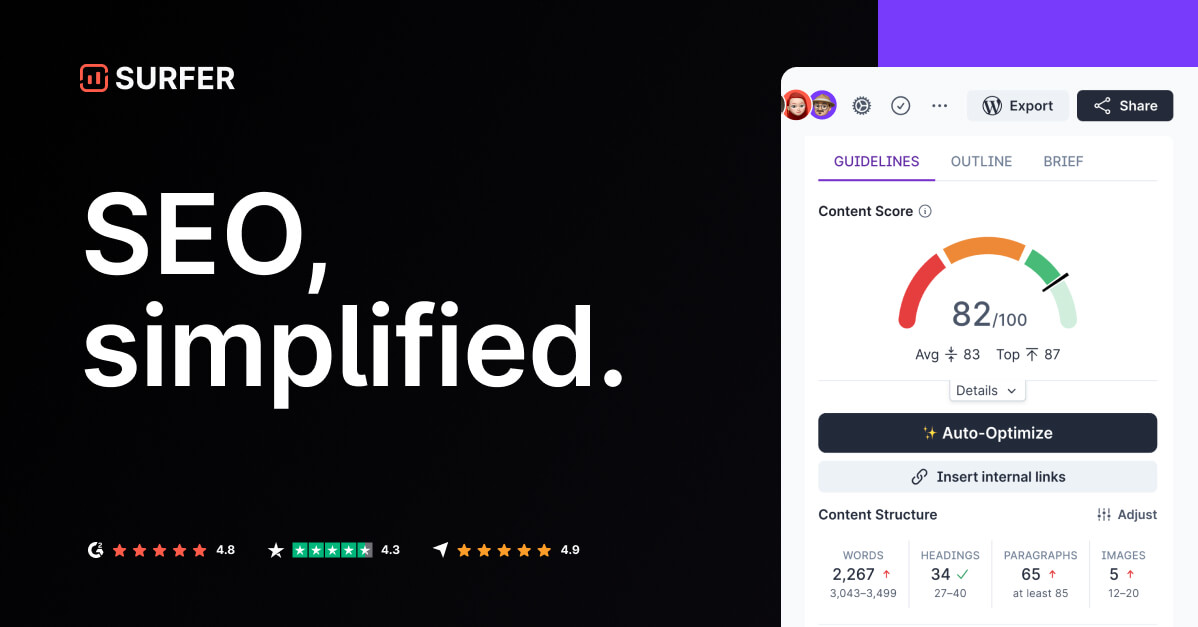
What is SurferSEO?
Key features
Content Editor
real-time optimisation suggestions as you write, showing word count targets and keyword recommendations
Competitor Analysis
examines the top-ranking pages for your keyword to identify content patterns and topics
Keyword Research
identifies search volume, difficulty scores, and related keywords to target
SERP Analysis
displays the current search results and their key metrics to inform your strategy
Content Audit
reviews existing pages to find optimisation opportunities
Pros & cons
Advantages
- Free tier provides genuine access to core features without requiring payment
- Data-based recommendations reduce guesswork about what search engines favour
- Straightforward interface that doesn't require deep SEO knowledge to use effectively
- Helps identify semantic gaps in your content that competitors are covering
Limitations
- Free tier has limitations on the number of analyses and exports you can run monthly
- Results depend on the quality of the underlying ranking data; niche keywords may have less reliable suggestions
- Focuses on on-page optimisation; doesn't address off-page factors like backlinks
Use cases
Optimising blog posts to rank for competitive keywords before publishing
Reviewing existing content to identify what structural changes could improve rankings
Planning SEO strategy by researching keyword difficulty and search volume trends
Comparing your content approach against pages currently ranking above you
Training content teams on what SEO-friendly content structure looks like in practice
Ready to try SurferSEO?
Pricing
Free
Free
Access to content editor, competitor analysis, and basic keyword research with monthly usage limits
Get started with SurferSEO
Click through to SurferSEO and start using it now.
- Always free
- No credit card