
Tenyks AI
AI platform for enhancing computer vision teams and model development.
- Paid
- Web, API
- DesignAI Tools for MLOpsResearch
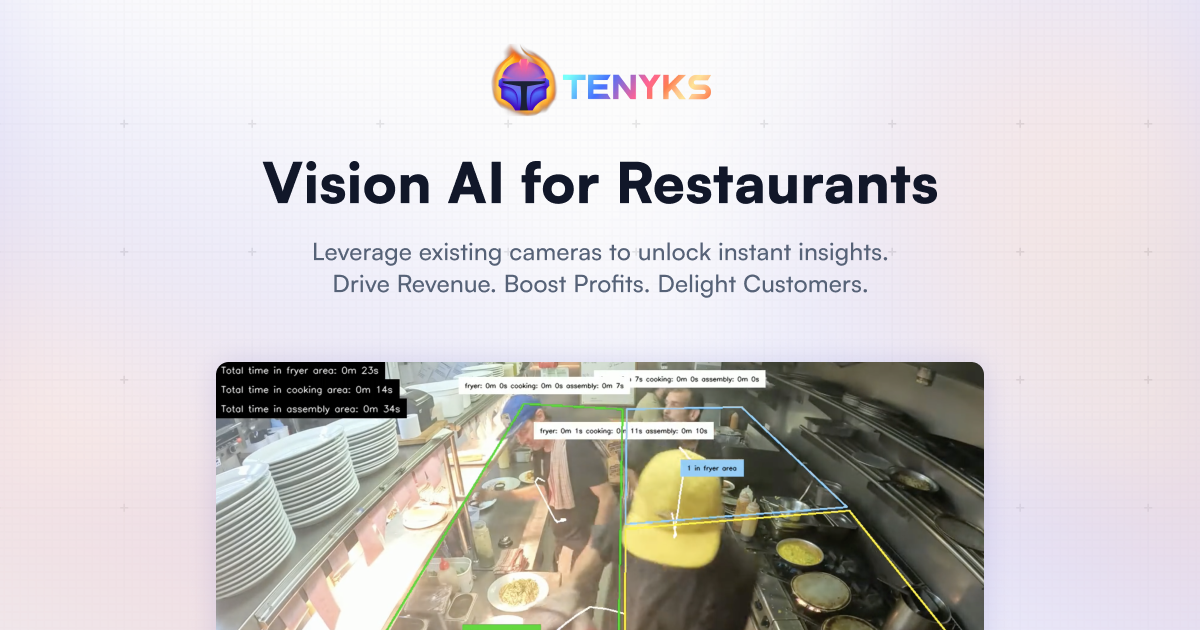
What is Tenyks AI?
Key features
Multi-modal search
Find and curate relevant images from large datasets using semantic and visual similarity
Data quality diagnostics
Identify annotation errors, class imbalance, and coverage gaps in datasets
Model performance analysis
Diagnose model failures and pinpoint data issues causing them
Cloud storage integration
Deploy datasets across enterprise cloud providers with drag-and-drop setup
Annotation prioritisation
Identify high-impact examples to minimise labelling requirements
Edge case detection
Automatically surface rare or undersampled classes for targeted collection
Pros & cons
Advantages
- Reduces annotation costs and data collection time significantly
- Data-centric methodology improves model accuracy without constant retraining
- Multi-modal search makes it easier to find edge cases and problematic data
- Flexible cloud storage integration supports various enterprise backends
- Designed specifically for computer vision workflows
Limitations
- Requires uploading or connecting large datasets, which may present privacy or bandwidth constraints
- Specialised for computer vision only; not applicable to other ML domains
- Requires familiarity with data-centric ML approaches to use effectively
- Pricing likely prohibitive for small teams or individual researchers
Use cases
Crop disease detection and plant monitoring in agriculture with limited labelled data
Improving autonomous vehicle perception models by identifying edge cases and annotation errors
Curating medical imaging datasets for diagnostic models whilst maintaining compliance
Object detection in logistics and warehouse environments with class imbalance issues
Quality assurance through vision-based defect detection in manufacturing
Ready to try Tenyks AI?
Pricing
Starter
Contact sales
Suitable for teams getting started with data-centric computer vision development
Professional
Contact sales
Full platform access including multi-modal search, data diagnostics, model analytics, and cloud integrations
Enterprise
Contact sales
Custom configurations, dedicated support, scaled dataset handling, and deployment options tailored to your infrastructure
Get started with Tenyks AI
Click through to Tenyks AI and start using it now.