ThoughtSpot AI
AI search and analytics for enterprise business intelligence
- Free
- Web, API
- Data & AnalyticsWritingAI Document Search
- Always free
- No credit card
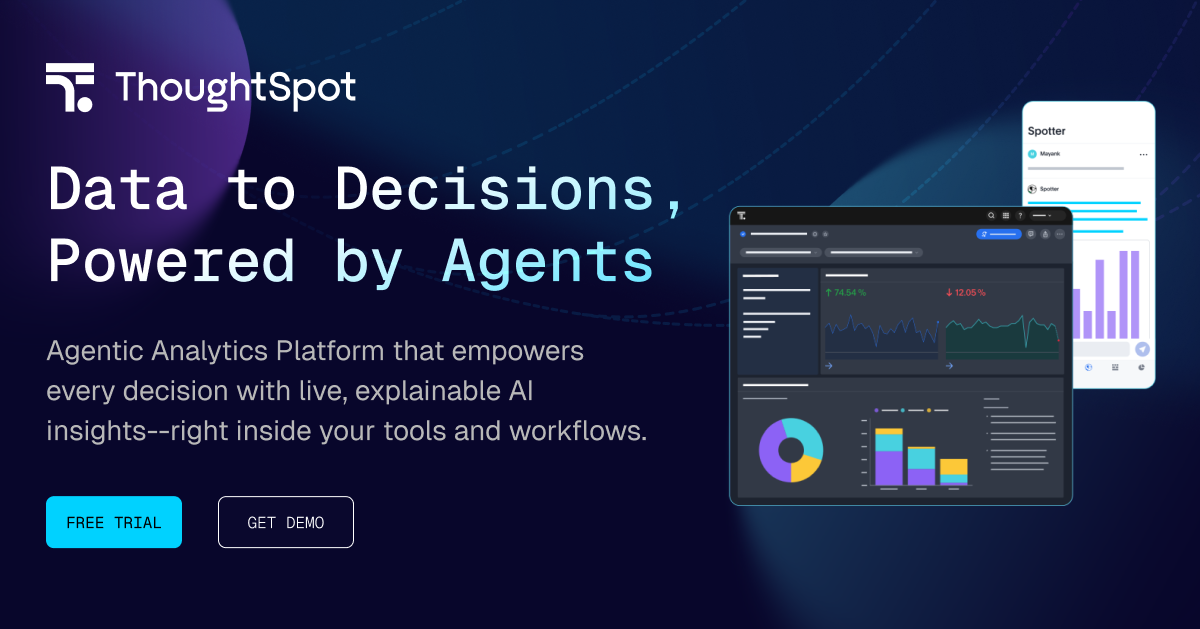
What is ThoughtSpot AI?
Key features
Natural language search
ask questions about your data using everyday language instead of SQL or technical queries
AI-driven insights
the system identifies patterns and anomalies in your data without you having to specify what to look for
Interactive visualisations
results appear as charts and tables that you can filter and drill into
Data connectivity
integrates with major data warehouses and databases including Snowflake, BigQuery, and Redshift
Collaboration features
share insights, pin frequently-used searches, and build collaborative workbooks
Pros & cons
Advantages
- Fast time to insight for non-technical users; reduces dependency on data analysts for routine questions
- Natural language interface is genuinely easier to use than learning SQL or report builders
- Works with your existing data infrastructure rather than requiring migration
- Free tier allows small teams or individual users to try the platform
Limitations
- Steep learning curve for setting up data connections and configuring the AI to understand your specific business context
- Free tier is limited and enterprise pricing can be substantial for large organisations
- Performance depends heavily on your underlying data warehouse; poorly structured data will produce poor results
Use cases
Sales teams exploring pipeline data and win/loss trends without submitting requests to analytics
Finance departments analysing spending patterns and budget variance quickly
Marketing teams investigating campaign performance and customer behaviour metrics
Operations teams monitoring KPIs and identifying anomalies in real-time data
Executive dashboarding where leadership needs quick answers to ad-hoc business questions
Ready to try ThoughtSpot AI?
Pricing
Free
Free
Limited access for individuals or small teams; restricted data connections and user seats
Standard
Contact for pricing
Full platform access for teams; multiple data source connections; standard support
Enterprise
Contact for pricing
Custom deployment options; advanced security and governance; dedicated support and training
Get started with ThoughtSpot AI
Click through to ThoughtSpot AI and start using it now.
- Always free
- No credit card