
Trading Literacy AI
AI-powered insights and education transform trading proficiency.
- Always free
- No credit card
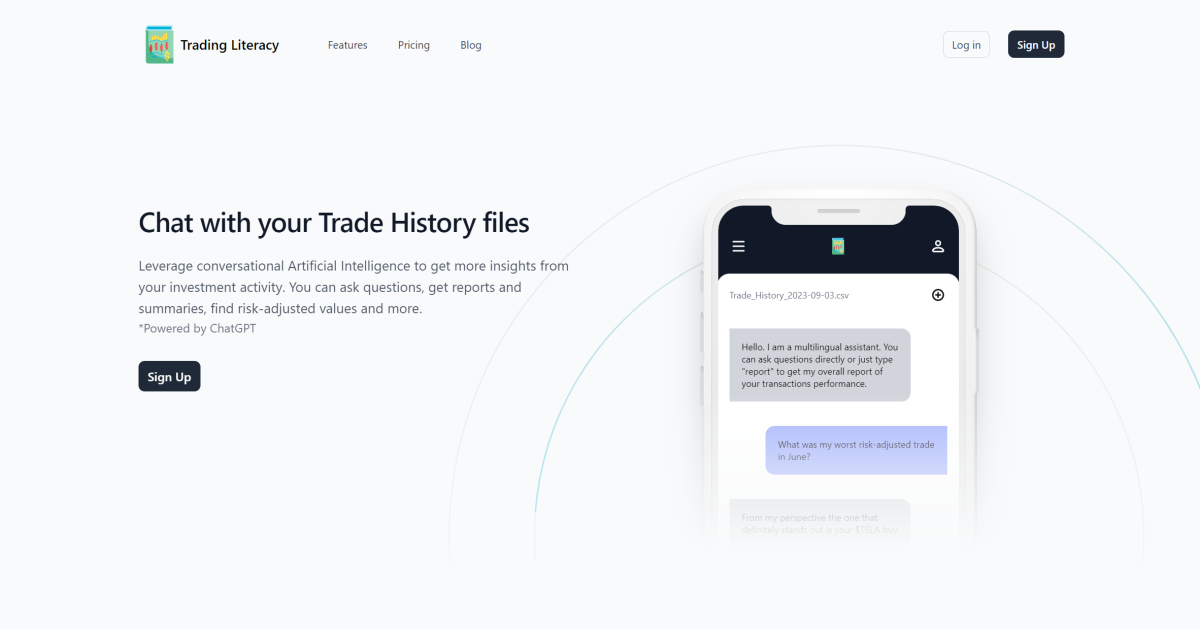
What is Trading Literacy AI?
Key features
AI-powered market insights
Generates analysis and observations about market trends and trading patterns
Educational content
Structured learning materials covering trading fundamentals and strategies
Interactive learning
Tools designed to help users practise and reinforce trading concepts
Data analysis assistance
Helps traders understand charts, price action, and technical indicators
Progress tracking
Monitors your learning journey and identifies areas for improvement
Pros & cons
Advantages
- Free to use with no subscription required
- Combines education with practical AI analysis, helping theory connect to real markets
- Suitable for beginners learning trading basics as well as experienced traders refining their approach
- AI assistance can save time when analysing charts and market conditions
Limitations
- Quality and reliability of AI insights depends on underlying data and algorithms; users should verify analysis independently
- Educational content may require active engagement; passive use won't necessarily improve trading results
- Free model may have limitations on features or usage compared to premium alternatives
Use cases
Learning trading fundamentals before risking money in live markets
Analysing charts and technical patterns with AI assistance
Building a stronger knowledge base across different trading strategies
Practising decision-making in a structured learning environment
Understanding risk management and position sizing principles
Ready to try Trading Literacy AI?
Pricing
Get started with Trading Literacy AI
Click through to Trading Literacy AI and start using it now.
- Always free
- No credit card