
VaultSandbox
Production-Like Email Testing Without Mocks
- Open Source
- Web, API, Self-hosted (Docker, Kubernetes, or traditional servers)
- AI Tools for TestingDeveloper ToolsCode
- Open source
- Free forever
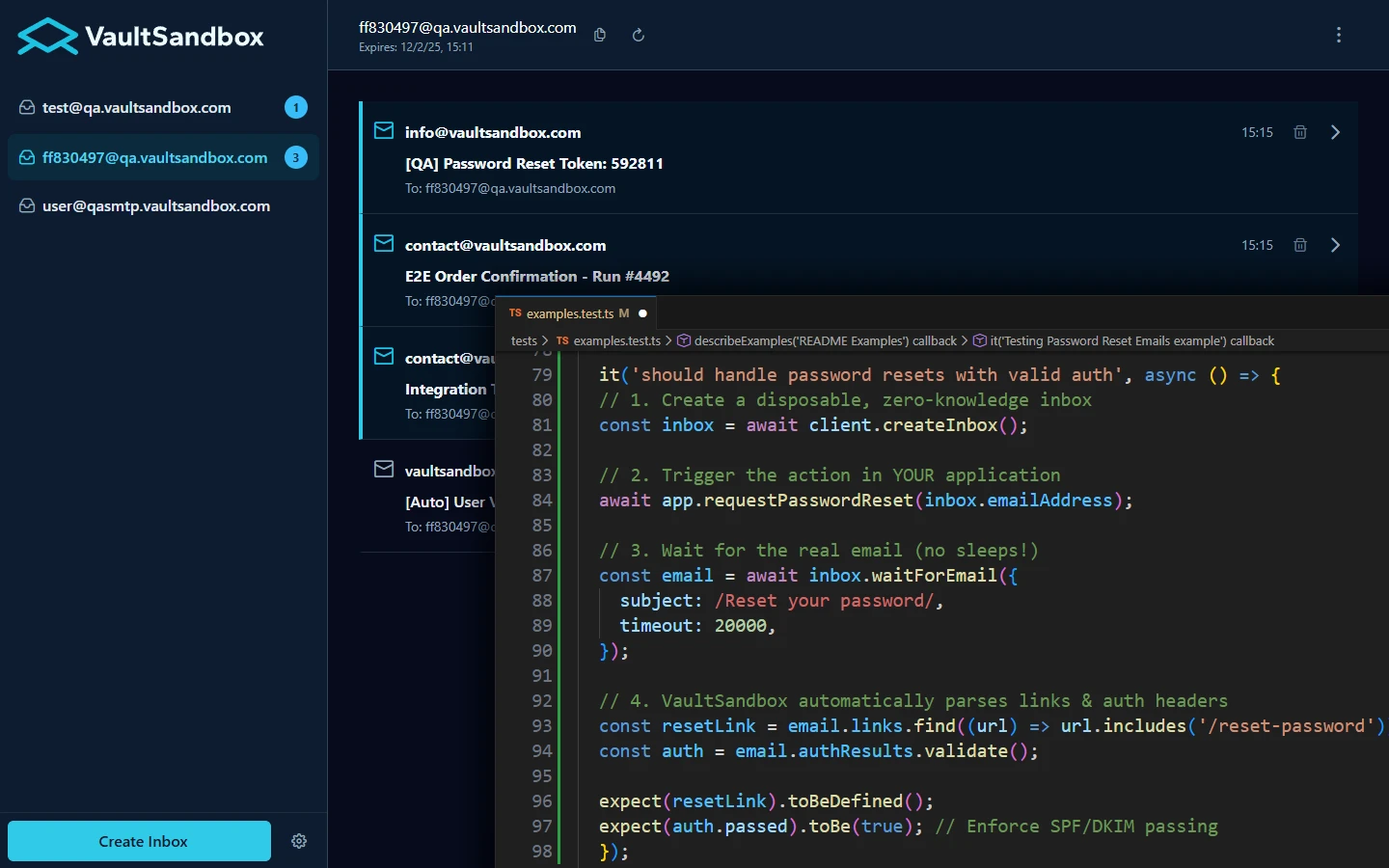
What is VaultSandbox?
Key features
Production-like email environment
Send and receive real emails in a sandbox context without affecting live systems
Open-source codebase
Full access to source code for customisation, auditing, and self-hosting
Template inspection
View rendered email output to catch HTML, CSS, and formatting issues before production
API-driven workflow
Integrate email testing directly into automated test suites and CI/CD pipelines
No mocks required
Test actual email delivery behaviour, SPF/DKIM validation, and client rendering
Local or self-hosted deployment
Run on your own infrastructure for complete data control
Pros & cons
Advantages
- Catches real-world email issues that mock-based testing misses, such as rendering problems across email clients
- Free and open-source, with no licensing costs or vendor lock-in
- Full transparency into how email testing works; you can audit and modify the tool as needed
- Integrates well into development and testing workflows without external service dependencies
Limitations
- Requires self-hosting and infrastructure setup, which adds operational overhead compared to managed services
- As an open-source project, community support may be more limited than commercial alternatives
- Needs careful configuration to avoid accidental emails reaching real addresses during testing
Use cases
Testing transactional emails like password resets, order confirmations, and notifications during development
Validating email template rendering across different clients and screen sizes
Automating email testing in CI/CD pipelines to catch template and delivery issues before release
QA testing of multi-step email workflows, such as verification links and scheduled digest emails
Integration testing for applications that depend on email delivery as part of critical user journeys
Ready to try VaultSandbox?
Pricing
Open Source
Free
Self-hosted email testing sandbox, full source code access, API for integration, community support
Get started with VaultSandbox
Click through to VaultSandbox and start using it now.
- Open source
- Free forever