
Xpeacho
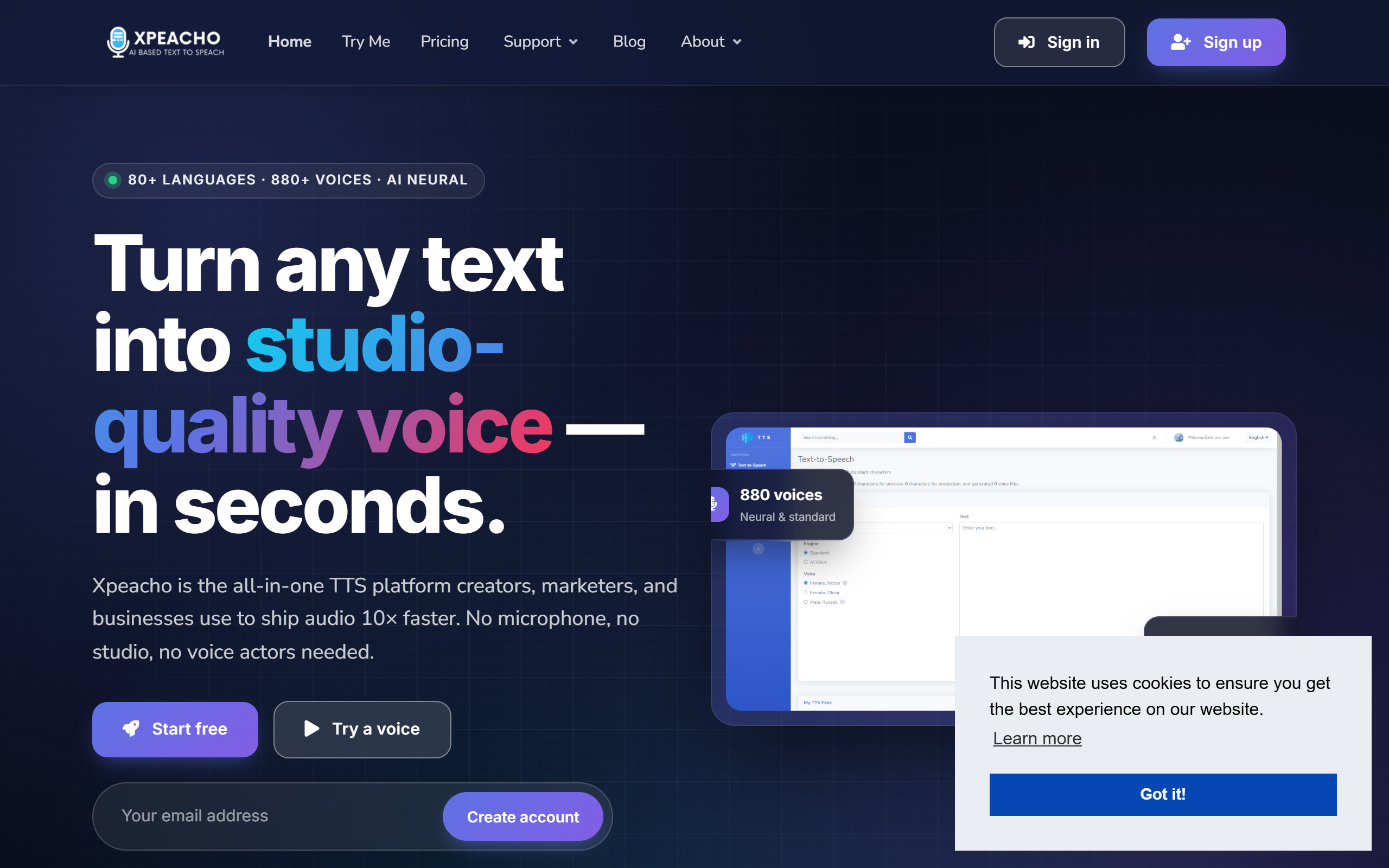
AI text-to-speech that turns any text into studio-quality voice across 80+ languages and 880+ voices.
- Freemium
- Web, API
- WritingCustomer SupportAudio
- Free plan available
- No credit card
What is Xpeacho?
Key features
880+ voices
A library of over 880 standard and neural AI voices spanning more than 80 languages.
SSML support
Fine control over pronunciation, emphasis, pauses and pitch using Speech Synthesis Markup Language.
Audio export
Renders narration for download as MP3 or WAV files.
Sound Studio
A built-in editor for shaping and refining generated audio on paid plans.
Voice effects
Standard and neural voice effects to vary delivery and tone.
Commercial licence
Generated audio can be used commercially, included even on the free plan.
Full API access
Programmatic integration for adding text-to-speech to custom applications.
Pros & cons
Advantages
- A free plan with a commercial licence lets you test output before paying anything.
- The voice catalogue is large, covering over 880 voices and more than 80 languages.
- SSML support gives detailed control over pronunciation, pauses and emphasis.
- Paid tiers are inexpensive, starting at 9 US dollars a month for 200,000 characters.
- Audio can be exported in both MP3 and WAV formats for flexible use.
Limitations
- The free plan is capped at just 2,500 characters a month and standard voices only.
- Neural voices are gated behind paid plans, so the free tier sounds more basic.
- The affiliate programme runs through a Google Form rather than a tracked affiliate dashboard.
- The /affiliates page returns a 404, so programme terms and commission rates are not published on the site.
Use cases
YouTube creators generating voiceover narration for videos without recording audio themselves.
Authors and publishers turning manuscripts into audiobook narration.
Marketers producing voice content for adverts, explainer videos and social posts.
Podcasters scripting and generating spoken segments or full episodes.
Developers integrating text-to-speech into their own apps through the API.
Businesses localising content into multiple languages using the multilingual voice library.
Ready to try Xpeacho?
Pricing
Free
Free
2,500 characters per month, standard voices, standard voice effects, limited audio file creation, commercial licence, no credit card required.
Basic
9 per month
200,000 characters per month, standard and neural voices, standard and neural voice effects, limited audio file creation, Sound Studio.
Standard
19 per month
500,000 characters per month, all standard and neural voices, all voice effects, unlimited audio file creation, Sound Studio.
Professional
39 per month
1,000,000 characters per month, all standard and neural voices, all voice effects, unlimited audio file creation, Sound Studio, 24x7 customer support.
Get started with Xpeacho
Click through to Xpeacho and start using it now.
- Free plan available
- No credit card