
Zero LLM deep codebase analysis built on math engine
Codebase.Observer - Intelligent Codebase Blueprints
- Free
- Web
- DesignImage GenerationCode
- Always free
- No credit card
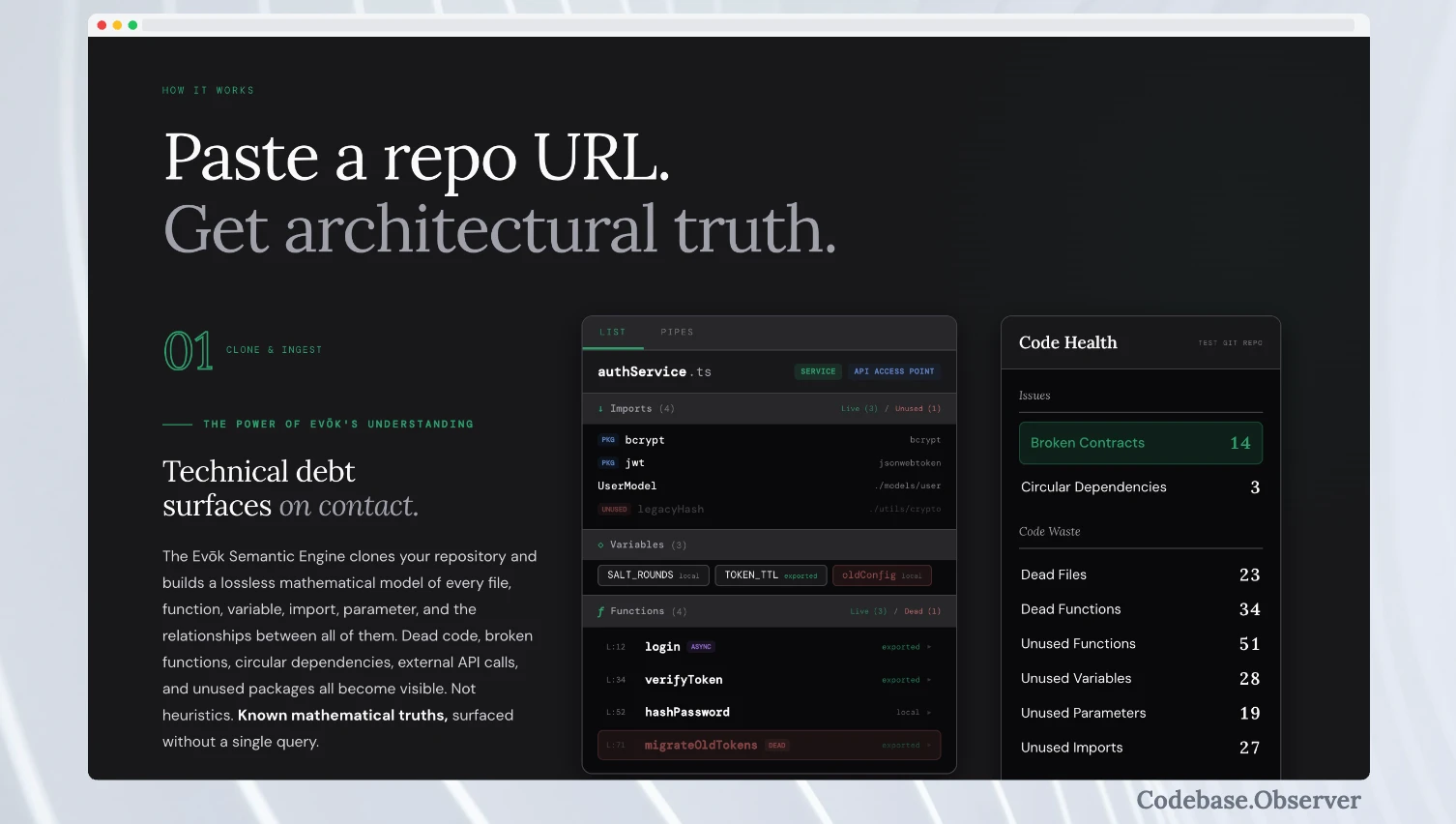
What is Zero LLM deep codebase analysis built on math engine?
Key features
Mathematical codebase analysis
Uses algorithms to derive accurate architectural truths from your code rather than guessing or relying on outdated documentation
Multi-language support
Analyses TypeScript, JavaScript, Python, Ruby, Go, and Java repositories
Flexible analysis options
Run automated nightly scans on a single repo or request individual reports on demand
Free tier for smaller projects
Analyse repositories under 10,000 lines of code at no cost
On-demand reporting
Purchase individual analysis reports for specific repositories when needed without ongoing commitments
Pros & cons
Advantages
- Always current documentation that reflects your actual code, not outdated manuals written months ago
- No coding required; the analysis happens automatically and generates results without manual effort
- Affordable entry point with a free tier for smaller codebases and pay-as-you-go reporting for larger ones
- Works with common programming languages that most teams already use
Limitations
- Relies on code quality and structure; poorly organised code may produce less useful blueprints
- Limited to single repository analysis per subscription, so large monorepos or multiple projects require separate scans
- Free tier has a 10,000 LOC cap, which excludes many production applications from cost-free analysis
Use cases
Onboarding new team members by providing accurate documentation of how existing code is structured
Identifying architectural patterns and dependencies in legacy codebases you've recently inherited
Verifying that your codebase matches its intended design and spotting unintended complexity
Maintaining up-to-date documentation for internal systems without manual updates
Preparing technical overview documents for stakeholders or compliance purposes
Ready to try Zero LLM deep codebase analysis built on math engine?
Pricing
Pay-as-you-go
Custom pricing
Individual analysis reports for repositories above 10,000 LOC; nightly automated scans available
Get started with Zero LLM deep codebase analysis built on math engine
Click through to Zero LLM deep codebase analysis built on math engine and start using it now.
- Always free
- No credit card